Why Manufacturers Still Struggle to Access Equipment Knowledge
Why Manufacturers Still Struggle to Access Equipment Knowledge
6 minute read

…And what IT leaders can do about it
In manufacturing, problems rarely announce themselves politely. A machine faults or a line slows, and someone remembers fixing the exact same issues last year. An answer exists (everyone knows it does), but no one can get to it fast enough.
Those delays are costly, to say the least.
It’s not due to teams lacking skill or experience, either, but because equipment knowledge is scattered across systems that were never intended to work together. When access breaks down, even routine issues can become extended interruptions.
This presents IT leaders with an operations headache that swiftly escalates into a structural challenge that affects uptime, productivity, and every digital initiative layered on top.
Why equipment knowledge matters more than it used to
Manufacturing environments didn’t suddenly increase in operational management difficulty. They got layered. Most organizations now operate with a mix of:
- Long-running equipment that still does critical work
- Newer systems generating streams of operational data
- Teams spread across plants, shifts, and regions
At the same time, expectations changed. Customers expect quick, clear answers. They don’t want to search through folders, log into multiple systems, or guess which version of a document is correct. When answers aren’t forthcoming, frustration builds.
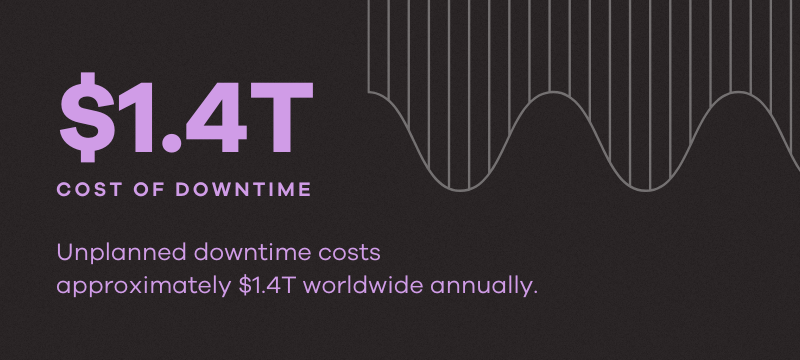
Unplanned downtime already carries a massive price tag worldwide ($1.4T, to be precise). Delayed access to troubleshooting steps, maintenance history, or operating procedures makes that problem worse.
Leadership is looking to IT to close the gap. At first, the request sounds simple: Make critical knowledge easy to find, reliable, and secure. Support new tools, including AI, without putting sensitive information at risk.
The challenge sits beneath the surface.
The hidden reason access keeps breaking down
Most manufacturers don’t suffer from missing knowledge. Instead, it’s an issue of fragmented structure as information spreads across tools built for specific jobs:
- Asset and maintenance systems
- ERPs and quality platforms
- Control system logs
- File shares, portals, and collaboration tools
Each system stores part of the story, but none hold the full picture. So common problems show up again and again:
- No shared structure or naming standards
- Thin or inconsistent metadata
- Security rules that differ by source
- Limited connection between plant and enterprise systems
Even well-funded analytics or AI efforts struggle here. The technology may work, but the information feeding it is disconnected or poorly prepared. Teams get partial answers or confident answers that are flat-out wrong, which impairs trust from the get-go.
This is one reason so many AI initiatives stall early. The foundation just isn’t ready to support them.
What slow access does to the business
When equipment knowledge is hard to reach, the impact spreads far beyond IT. Here are three key areas:
1. On the Floor
- Troubleshooting takes longer than it should
- Small issues grow into extended downtime
- Maintenance stays reactive instead of planned
2. Across the Workforce
- Skilled technicians waste time searching
- New hires struggle to get up to speed
- Frustration builds, especially during high-pressure moments
3. Inside IT
- Constant requests for access and data pulls
- One-off integrations that never quite go away
- Less time for strategic work, more time managing friction
All of this creates a gap between what leadership expects and what systems can realistically deliver.
A better way to think about equipment knowledge access
Fixing this doesn’t start with replacing systems or adding another tool. It starts with treating equipment knowledge as a shared asset that needs structured context and guardrails.
Step 1: Connect knowledge without weakening controls
Security remains critical since manufacturing data is sensitive by nature. But secure doesn’t have to mean isolated. IT leaders need a way to connect knowledge across asset systems, ERPs, plant platforms, and content repositories while keeping permissions intact. Access rules should travel with the content, no matter where it surfaces.
This matters even more as AI enters daily workflows. Teams won’t trust tools that blur access boundaries or expose the wrong information.
Action to consider:
- Identify which systems hold equipment-related knowledge
- Map how access rules differ across them
- Look for ways to connect content without flattening security
Step 2: Prepare information so it’s usable
Raw content rarely helps in the moment. Without preparation, search and AI struggle to deliver relevant answers. Preparation simply brings order to the chaos via:
- Clear classification
- Added context
- Consistent structure
- Information broken into meaningful pieces
When this work is done, search feels sharper and answers feel grounded. Based on this, confidence is more readily established and nurtured.
Action to consider:
- Start with high-use content like manuals and SOPs
- Identify gaps in labels, context, and structure
- Prioritize preparation where questions repeat most often
Step 3: Deliver answers where work already happens
During an outage, no one wants to jump systems. Knowledge should surface inside the tools teams already use, whether that’s maintenance platforms, service desks, collaboration apps, or mobile devices on the floor.
Access should feel simple, even though strong governance sits behind it. This also supports remote work since experts can help faster when everyone sees the same information.
Action to consider:
- Track where teams spend most of their time
- Focus delivery there first
- Reduce context switching during critical tasks

Building a foundation that supports what comes next
This doesn’t need to be a massive transformation project. Strong IT teams take a phased approach:
- Identify high-value knowledge tied to equipment performance
- Assess readiness and access challenges
- Define access models that support real workflows
- Plan for future AI use, even if details evolve
The goal stays consistent throughout: you want knowledge that’s easily discoverable, reliable, and secure. That foundation is what helps support faster maintenance, steadier operations, and more successful digital initiatives.
What changes when access finally works
The shift is noticeable. Teams resolve issues faster because the right guidance appears quickly. Maintenance work becomes more predictable and production runs with fewer interruptions. IT spends less time responding to urgent requests and more time shaping long-term improvements.
Confidence in new tools grows because results feel trustworthy, mainly because people can stop guessing where information lives. The knowledge was always there, but making it reachable is what turns it into results.
See how BA Insight can resolve your knowledge access issues.