A CFO’s Guide to Technology Business Management (TBM): Turning IT Spend into Business Value
A CFO’s Guide to Technology Business Management (TBM): Turning IT Spend into Business Value

Technology Business Management (TBM) helps finance and IT speak the same language about cost, consumption, and value. This guide explains the TBM concepts a CFO needs to improve IT cost transparency, align technology spending to business outcomes, and make better tradeoffs across “run,” “grow,” and “transform” investments—especially amid evolving CFO challenges and priorities. A 10-term TBM glossary is included as an add-on at the end.
The sections below explain the TBM framework, how to operationalize cost transparency, and how to use TBM metrics and governance to improve decision-making. Examples are written to be illustrative; tailor the approaches and measures to your organization’s operating model, chargeback/showback maturity, and data quality.
The TBM Framework: What It Is and Why It Matters for CFOs
The Technology Business Management (TBM) framework is a structured approach that helps organizations manage their IT resources and spending effectively. It provides a comprehensive view of IT costs, enabling CFOs to understand where money is being spent and how it aligns with business objectives. This framework is essential for CFOs as it enhances cost transparency, allowing for better financial decision-making and resource allocation.
How TBM Enables IT Cost Transparency
The TBM framework enhances IT cost transparency by categorizing expenses into clear, understandable segments. This categorization allows CFOs to see the true cost of IT services and investments, facilitating more informed budgeting and financial planning. For instance, by breaking down costs into specific categories, CFOs can identify areas where spending can be optimized, leading to significant savings and improved financial performance.
The CFO’s Role in Implementing TBM
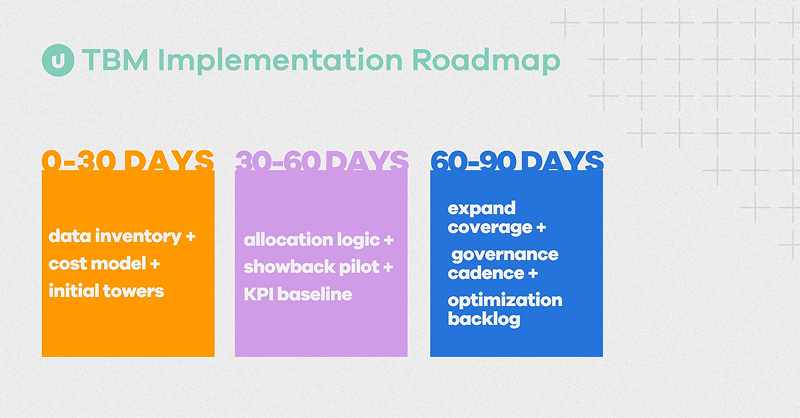
CFOs play a pivotal role in implementing the TBM framework within their organizations. They are responsible for driving the adoption of TBM practices, ensuring that financial metrics align with IT strategies. This involves collaborating with IT leaders to establish cost allocation models and governance structures that support financial accountability. By taking an active role in TBM implementation, CFOs can foster a culture of financial discipline and strategic alignment across the organization.
How TBM Concepts Like Consumption, Run, Grow, and Transform Impact CFO Decision-Making
TBM concepts such as consumption and the run/grow/transform model significantly influence CFO decision-making by providing a framework for evaluating IT investments. These concepts help CFOs understand the financial implications of their decisions and align IT spending with overall business objectives.
The Financial Impact of Consumption in TBM
Consumption has a direct financial impact on IT budgets, as it reflects the actual usage of resources. By monitoring consumption, CFOs can identify trends and make informed decisions about resource allocation. For example, if consumption data indicates that certain services are underutilized, CFOs can reallocate funds to more critical areas, optimizing overall IT spending.
How Run, Grow, and Transform Categories Guide IT Investment
The run, grow, and transform categories provide a strategic framework for guiding IT investments. CFOs can use these categories to assess the potential return on investment for various initiatives. For instance, investments in the “grow” category may focus on expanding capabilities, while “transform” initiatives might involve adopting new technologies that enhance operational efficiency. By categorizing investments, CFOs can prioritize spending based on strategic goals.
How CFOs Use TBM Value Management to Align IT Spending With Business Goals
CFOs can leverage TBM value management to ensure that IT spending aligns with broader business objectives. This involves assessing the ROI of IT investments and making data-driven decisions that support organizational goals.
Key TBM Financial Metrics for Measuring IT Value
Key TBM financial metrics include cost per service, ROI, and total cost of ownership. These metrics provide CFOs with valuable insights into the effectiveness of IT spending. By regularly monitoring these metrics, CFOs can make informed decisions about future investments and ensure that IT resources are utilized effectively.
How the TBM Governance Model Supports Financial Accountability
The TBM governance model establishes policies and processes that promote financial accountability in IT spending. By implementing a robust governance framework, CFOs can ensure that all IT expenditures are justified and aligned with business objectives. This accountability fosters trust between IT and finance, ultimately leading to better financial outcomes.
Tools and Frameworks That Support Effective TBM Implementation for CFOs
Several tools and frameworks can assist CFOs in implementing TBM effectively. These tools provide insights into IT spending and help organizations manage their resources more efficiently.
Software Solutions That Enhance TBM Cost Transparency
Software solutions that enhance TBM cost transparency include financial management systems and IT asset management tools. These solutions provide CFOs with real-time data on IT spending, enabling them to make informed decisions about resource allocation. For example, a financial management system can help track costs associated with specific IT services, allowing CFOs to identify areas for improvement. For organizations with significant telecom spend, telecom compliance can also be a key driver of cost control and risk reduction.
How CFOs Monitor TBM KPIs and Financial Outcomes
CFOs monitor TBM Key Performance Indicators (KPIs) and financial outcomes through regular reporting and analysis. By establishing a set of KPIs, CFOs can track the effectiveness of their IT investments and make data-driven decisions. This monitoring process is essential for ensuring that IT spending aligns with business goals and delivers value to the organization.
Real-World Examples of CFO Benefits From Adopting TBM
Adopting TBM terms and frameworks has provided numerous benefits to CFOs in various organizations. These real-world examples illustrate the positive impact of TBM on financial decision-making.
How CFOs Improve IT Budgeting Using TBM
CFOs have improved IT budgeting by implementing TBM frameworks that enhance cost transparency and accountability. For instance, one organization reported a reduction in IT spending after adopting TBM practices, as they were able to identify and eliminate unnecessary expenses. This improvement not only optimized their budget but also aligned IT spending with strategic business goals.
Case Studies That Demonstrate TBM’s Impact on Financial Decision-Making
Several case studies highlight the impact of TBM on financial decision-making. In one case, a CFO utilized TBM metrics to justify an investment in cloud services, resulting in an increase in operational efficiency. This case demonstrates how TBM can provide the insights needed to make informed financial decisions that drive organizational success.
Optional next step: evaluate tools that support TBM reporting, allocation, and IT asset/contract data quality.
Enhance Your TBM Strategy With Cimpl
Cimpl offers a comprehensive platform designed to streamline Technology Business Management (TBM) for CFOs and IT leaders. By integrating TBM principles with Cimpl’s cost transparency and IT asset management capabilities, organizations can optimize IT spending, improve financial accountability, and align technology investments with business goals more effectively.
Discover how Cimpl can empower your financial leadership and transform your IT cost management today. Learn more
Add-on: 10 Essential TBM Terms (Quick Glossary)
If you want the narrative first, feel free to skip this glossary and come back to it when you need a quick definition.
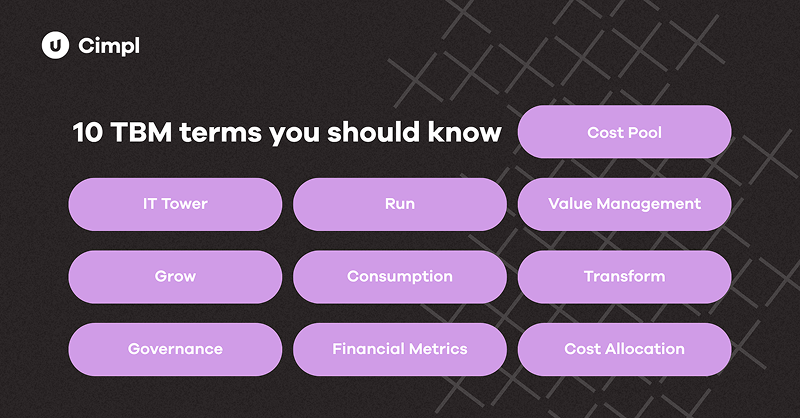
Understanding key TBM terms is essential for CFOs to navigate the complexities of IT financial metrics. Here are 10 critical terms every CFO should know:
- Cost Pool: A cost pool is a grouping of related expenses that are allocated to specific IT services or projects. Understanding cost pools helps CFOs manage budgets more effectively by showing where resources are being utilized.
- IT Tower: An IT tower is an organizational grouping that categorizes IT services into distinct areas (for example, infrastructure, applications, and support). This structure helps organize technology spending and improve accountability.
- Consumption: In TBM, consumption refers to the actual usage of IT resources and services. Monitoring consumption patterns helps CFOs make data-driven decisions about resource allocation and cost management.
- Run: Run encompasses the ongoing operational costs associated with maintaining IT services. CFOs track run spend to ensure core services are adequately funded and managed.
- Grow: Grow includes investments intended to expand IT capabilities and services. CFOs evaluate grow investments to confirm alignment to strategic business goals.
- Transform: Transform focuses on initiatives that fundamentally change how IT services are delivered. CFOs assess transform initiatives to ensure the expected value justifies the risk and investment.
- Value Management: A set of practices for evaluating whether IT spend is producing measurable business outcomes (for example, risk reduction, productivity gains, revenue enablement). It typically combines financial views (ROI, TCO) with operational drivers (demand, utilization, service levels).
- Governance: In TBM, governance refers to the policies and processes that support financial accountability and transparency in IT spending. Effective governance helps maintain trust and alignment between IT and finance.
- Financial Metrics: Measures used to manage IT like a business—commonly unit cost (for example, cost per user, cost per VM), service cost, variance-to-budget, the run/grow/transform mix, and demand/utilization drivers. Good metrics link dollars to a controllable operational lever.
- Cost Allocation: Cost allocation is the process of distributing costs to different departments or projects based on usage or other criteria. Understanding cost allocation is vital for accurate budgeting and financial reporting.
Cost Pools and Their Impact on IT Budgeting
A cost pool is a collection of costs that are grouped together for the purpose of allocation to specific IT services or projects. By understanding cost pools, CFOs can better manage their IT budgets, ensuring that resources are allocated efficiently. For example, if a cost pool includes expenses related to cloud services, CFOs can analyze usage patterns to determine if the spending aligns with business needs and adjust budgets accordingly.