Top 5 Knowledge Management Trends for 2026
Top 5 Knowledge Management Trends for 2026
7 minute read

How AI Knowledge Platforms Are Transforming Customer Service
AI will not define the winners of 2026. AI-powered knowledge will.
The latest 2026 Emerging Contact Center Technology Study from CCW Digital highlights how aggressively organizations are investing in AI, automation, and digital service experiences. But beneath those investments lies a more fundamental question:
Is the knowledge powering those systems mature enough to scale?
In 2026, knowledge management will shift from a back-office operational function to strategic infrastructure for AI-driven service. Organizations that treat knowledge as a governed, measurable, continuously improving asset will unlock the true value of AI. Those that do not will struggle with inconsistent answers, operational friction, and declining customer trust.
The research confirms that AI success depends on the maturity of the knowledge ecosystem beneath it.

Here are the five knowledge management trends shaping 2026, and what they mean for enterprise service leaders.
1. AI-Driven Knowledge Strategy Becomes Standard
In 2026, your AI initiatives will dictate your knowledge management strategy, not the other way around. Customer service and experience remain top priorities, with organizations deploying virtual agents and conversational AI to manage rising interaction volumes. However, these AI systems are only as reliable as the knowledge they retrieve.
Key Stat: According to CMP’s market study, 80% of customer contact leaders say that existing databases and systems prevent the success of their AI investments.

This highlights a critical disconnect: AI tools cannot deliver precise, helpful answers if the underlying information is fragmented or inconsistent. As you expand automated support channels, knowledge quality, structure, and governance become foundational requirements.
What This Means for Leaders:
- Prioritize Governance: Establish strict rules for content creation, approval, and maintenance to ensure your AI has access to a single source of truth.
- Align Knowledge to AI: Ensure your knowledge management strategy directly supports specific automation goals, from chatbots to agent-assist tools.
- Address System Fragmentation: Consolidate disparate tools and repositories. 73% of leaders blame inefficient systems for stunting agent development and AI performance.
2. The Shift from Repositories to Living Knowledge Systems
The era of static content repositories is over. A dominant knowledge management trend for 2026 is the transition to dynamic, living knowledge ecosystems capable of continuously updating and self-monitoring information.
Key Stat: Legacy systems are a significant barrier; 62% of leaders see their current knowledge bases as a consistent challenge because they are outdated and hard to navigate.

AI cannot deliver consistent outcomes if it must search across siloed, manually managed repositories. This fragmentation increases the risk of conflicting answers and “AI hallucinations,” leading to poor customer experiences. In response, market leaders are adopting self-healing knowledge platforms that use AI to automatically surface, verify, and update information. These dynamic systems eliminate duplication, reduce manual oversight, and ensure every touchpoint draws from a knowledge base that learns and improves with every interaction.
What This Means for Leaders:
- Deploy Unified Search: Implement cross-repository search and governance as a strategic imperative for scalable and consistent operations.
- Demand Interoperability: Your knowledge architecture must connect seamlessly with your AI tools to create a cohesive ecosystem.
- Establish a Single Source of Truth: Centralized, accurate information is operationally mandatory for any AI knowledge management initiative.
3. Knowledge Becomes a Strategic Asset for Efficiency
In 2026, knowledge is no longer just a support tool; it’s a core asset that drives operational excellence by embedding intelligence directly into the flow of work. Executives are elevating knowledge management to address productivity pressures by reducing search time, eliminating rework, and ensuring every employee has instant answers within their daily workflow.
Key Stats:
- 77% of leaders plan to hold AI accountable for improving employee productivity
- Only 28% have a holistic measurement framework in place
Real efficiency gains come from reducing friction in knowledge access. By integrating an AI knowledge platform with core business tools, leading enterprises minimize interruptions, accelerate onboarding, and dramatically improve both customer and employee experiences.
Embedding knowledge into workflows delivers measurable business impact:

- Shorter handle and resolution times for customer-facing teams.
- Faster time-to-proficiency for new hires.
- Fewer escalations and repeated questions.
- Consistent, high-quality information at every decision point.
What This Means for Leaders:
- Align Metrics to Business KPIs: Tie knowledge performance directly to operational goals like first contact resolution (FCR) and agent training time.
- Optimize Search Performance: Faster, more accurate information retrieval directly reduces agent handle time and improves customer satisfaction.
- Focus on Knowledge Maturity: Recognize that better content quality directly influences workforce productivity and operational efficiency.
4. Addressing Knowledge Immaturity as a Core Business Risk
One of the most critical but overlooked risks for enterprises in 2026 is knowledge immaturity. When organizations rush to deploy AI without first establishing a reliable “truth layer,” they expose themselves to compounding errors from outdated content, conflicting guidance, and AI-generated responses based on inaccurate data.
Key Stat:
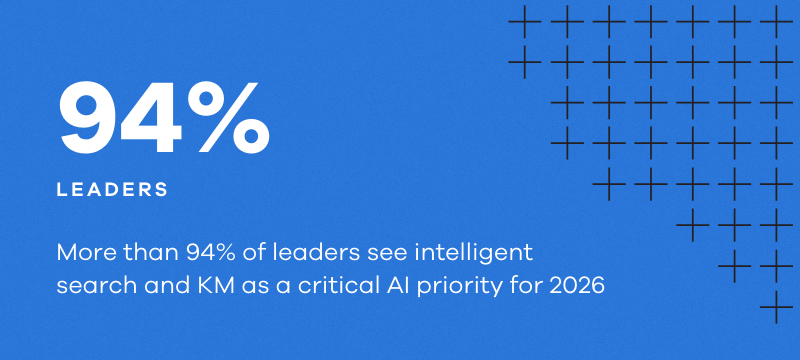
- More than 94% of leaders see intelligent search and knowledge management as a critical AI priority for 2026
Yet, many are building on weak foundations. Every AI agent, bot, or copilot is only as trustworthy as the knowledge it draws from. A robust truth layer—centralized, verified, and actively managed—ensures that both human and AI agents deliver consistent and up-to-date answers. Without it, the risks of AI hallucinations and eroded customer trust grow as automation scales.
What This Means for Leaders:
- Fund the Truth Layer First: Ensure all AI tools pull from a single, continuously updated source of truth, not fragmented or duplicate content repositories.
- Mandate Strict Governance: Quality control is not optional in an AI-first environment. Implement data governance and real-time monitoring to proactively resolve knowledge gaps.
- Continuously Monitor Knowledge Health: Track the accuracy, ownership, and update cycles for every asset in your knowledge ecosystem to proactively manage content lifecycles.
5. Building Trust and Consistency Through Governed Knowledge
Ultimately, experience consistency is the biggest differentiator in a competitive market. Customers do not care whether an answer came from a bot or a human; they care if the answer was correct, consistent, and built confidence in your brand. Delivering this level of consistency at scale is impossible without a sophisticated knowledge management strategy.
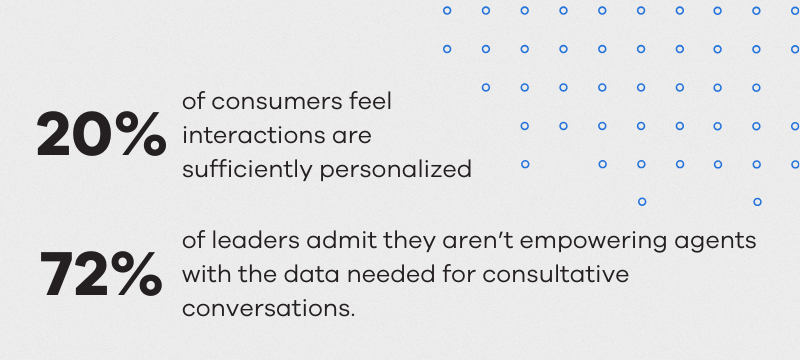
This requires governed knowledge, unified retrieval, and structured content design. Enterprises that operationalize a dedicated Knowledge Management System will build lasting customer trust. The market study reveals that less than 20% of consumers feel today’s interactions are sufficiently personalized, and 72% of leaders admit they aren’t empowering agents with the data needed for consultative conversations. Closing this gap starts with a commitment to knowledge quality.
What This Means for Leaders:
- View Trust as a Knowledge Outcome: Recognize that poor knowledge quality directly destroys customer confidence and brand reputation.
- Rely on Centralized Governance: Cross-channel consistency depends on the unified management provided by a modern knowledge management system.
- Prioritize Knowledge Maturity: Your AI strategy is only as strong as the knowledge foundation it is built upon.
Conclusion: Knowledge Infrastructure Determines Your Ability to Scale
Enterprises investing heavily in AI without strengthening their underlying knowledge foundations will face ongoing challenges with accuracy, adoption, and trust. Conversely, organizations that invest in knowledge maturity are well-positioned to deliver scalable, reliable, and future-ready service experiences.
As one industry leader stated in the CMP Market Study, “2026 will be about focus. We’re moving from experimentation to execution.” The companies that treat knowledge as core infrastructure will scale AI responsibly and effectively. In the AI era, knowledge is no longer just documentation; it is the infrastructure that determines your ability to win.