How to Accelerate Knowledge Management Maturity in 2025 and Beyond
How to Accelerate Knowledge Management Maturity in 2025 and Beyond
4 minute read

Artificial intelligence is reshaping the way organizations deliver service and support. Yet one truth stands out in the newly published Knowledge Management (KM) Maturity Model from Gartner: AI will only be as strong as the knowledge it’s built on.
That means customer experience leaders can’t treat knowledge as an afterthought or a byproduct of daily work. It must be managed as a core business capability, driven by strategy, culture, and governance advancing in step with technology.
Why maturity matters
Many organizations already invest heavily in AI for customer service for everything from virtual agents to self-service portals. But without a strong knowledge foundation, those investments underperform. Customers get generic or inaccurate answers. Agents waste valuable time searching. Leaders see disappointing adoption rates.
Maturity matters because it determines whether knowledge is:
- Scattered or centralized
- Static or continuously improving
- Dependent on a few experts or scalable across the organization
The higher the maturity, the more knowledge becomes a strategic asset that drives efficiency, customer satisfaction, and employee empowerment.
The six dimensions of maturity
Gartner outlines six attributes that define how mature a KM program is:
- Culture: Do employees naturally share knowledge, or hoard it?
- Strategy: Is KM aligned to business goals, or treated as a side project?
- People: Are roles defined and supported, or is KM “extra work”?
- Process: Are knowledge workflows captured and maintained consistently, or left to chance?
- Governance: Are there standards for quality, ownership, and accountability?
- Technology: Is the platform unified and AI-ready, or fragmented?
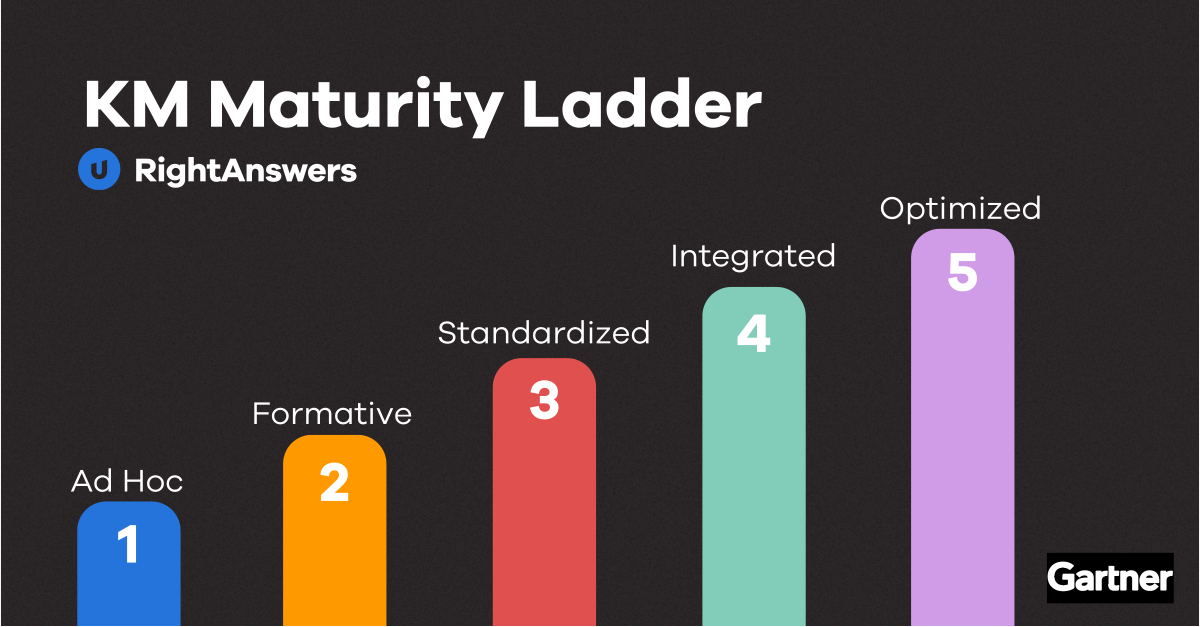
Maturity spans five stages, from ad hoc (where knowledge is scattered and unstructured) to optimized (where knowledge is continuously refined and embedded in daily work).
How to self-assess
You don’t need a full maturity audit to get started. Ask a few practical questions across each dimension:
- Culture: Do employees see knowledge sharing as part of their role?
- Strategy: Does KM have clear goals linked to customer or business outcomes?
- People: Who owns KM, and do they have the authority to drive change?
- Process: How often is knowledge reviewed or updated?
- Governance: What happens when content is outdated or conflicting?
- Technology: Can your systems connect knowledge across repositories?
Even answering these at a high level will help you spot gaps that hold back AI and hinder service performance.
Common pitfalls that stall KM maturity
Across industries, Gartner highlights three recurring obstacles:
- Tech-first thinking: Buying a new platform without defining how it will be used.
- Lack of cultural alignment: Leaders push KM initiatives, but employees see no “what’s in it for me.”
- Weak governance: Knowledge bases fill up quickly, but no one is accountable for quality.
Recognizing these pitfalls early can help you avoid repeating the same mistakes.
Practical steps to advance
There’s no speed-running this quest. Advancing maturity levels is all about steady progress, and there’s no way to jump from Level 1 to Level 5 overnight. Some practical steps to get started include:
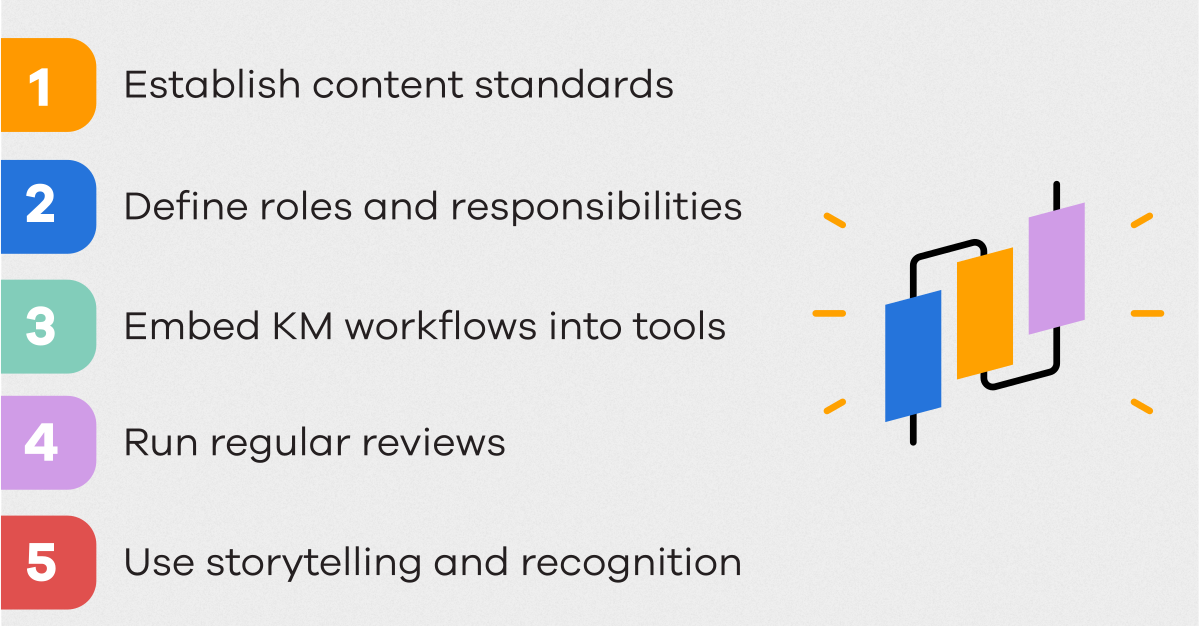
- Establishing content standards for articles and FAQs.
- Defining clear roles and responsibilities for knowledge contribution.
- Embedding KM workflows into existing tools like CRM or ITSM systems.
- Running regular reviews to retire outdated or duplicate content.
- Using storytelling and recognition to reinforce knowledge-sharing behaviors.
Even small wins will create momentum, and that makes it easier to get behind larger cultural and strategic shifts.
The bottom line
AI isn’t a shortcut that guarantees customer experience excellence. But AI will act as an amplifier. If the knowledge behind it is scattered, outdated, or inconsistent, don’t worry – your AI will tell you, and the results will be jarring.
That’s why the Gartner KM Maturity Model is so important right now. It gives leaders a framework to benchmark where they site today, and it provides a roadmap to level up service to meet rising customer expectations.
As we look to 2026 and beyond, at RightAnswers we know that knowledge is poised to become the most significant technology investment for service leaders. And the organizations that succeed will be those that treat KM as more than technology. They’ll treat it as a strategic, cultural, and operational discipline.
Ready to Take the Next Steps?
Dive into our AI Activation Report with Metric Sherpa to gauge your AI readiness.