What We Learned About KCS (and Why It Matters More Than Ever)
What We Learned About KCS (and Why It Matters More Than Ever)

If you missed our recent webinar, What Is KCS? Why Modern Support Teams Need It, here’s the short version: knowledge is the foundation everything else depends on. AI, self-service, agent onboarding, customer satisfaction. None of it works if the knowledge underneath is a mess.
Leading the session was Lana Kosnik, a certified KCS v6 trainer and consultant who has spent years helping organizations turn scattered knowledge into something they can actually trust. She’s worked inside complex environments supporting 25+ products, 1,000+ employees, 40,000+ articles, and over a million users. In other words, she’s lived the problems most support leaders are facing right now.
Here are the ideas that stuck with us.
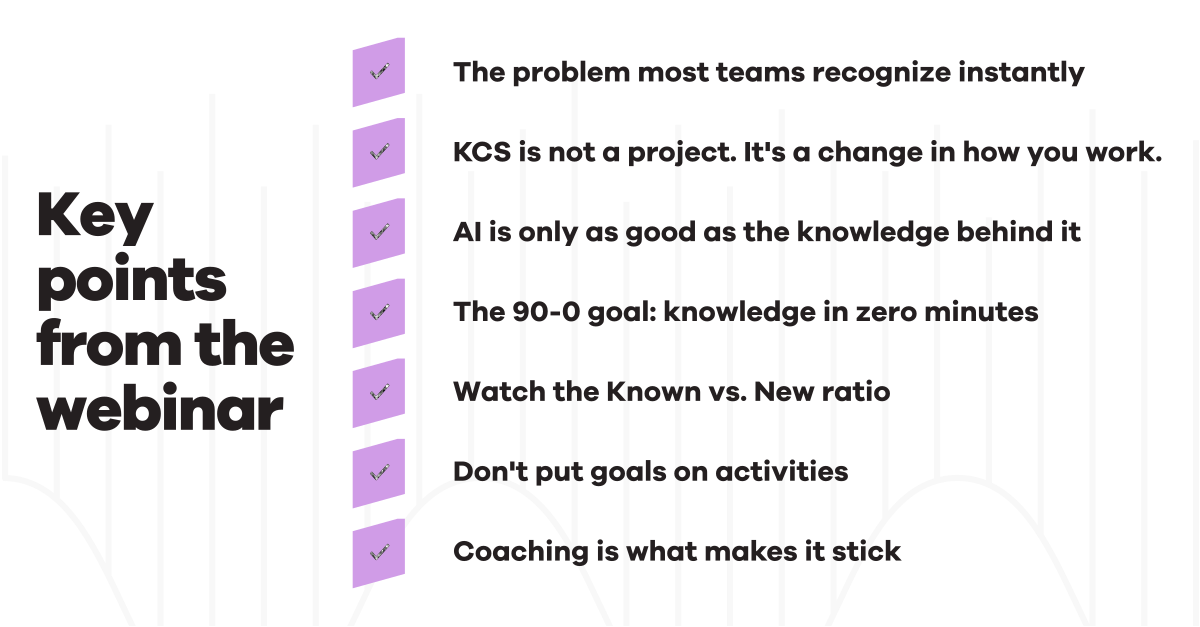
The problem most teams recognize instantly
Support teams are under pressure to resolve faster, onboard quicker, and get “AI-ready” all at once. But the numbers tell a hard story:
- 84% of contact center leaders say their agents still struggle to find answers.
- Only 29% believe their workforce is ready for AI.
Read those two stats together and the picture is clear. Most organizations are racing toward AI while agents can’t even find the answers they already have. That gap doesn’t close on its own, and AI won’t close it for you.
KCS is not a project. It’s a change in how you work.
This was Lana’s most important point, and she came back to it more than once. KCS isn’t a documentation sprint you finish and forget. It isn’t a certification you hang on the wall. It’s an organizational change that reshapes how people capture, improve, and reuse knowledge as part of their everyday work.
That distinction matters. Teams that treat KCS as a one-time project tend to see a burst of activity, then a slow slide back to old habits. Teams that treat it as a continuous practice, running the “solve” and “evolve” loops day in and day out, build knowledge and AI knowledge management that keeps getting healthier over time.
AI is only as good as the knowledge behind it
If there was one line worth writing on a sticky note, this was it. As Lana put it, agentic and LLM solutions are “only as effective as the content they consume.”
Automating a broken process doesn’t fix it. It just makes bad things happen faster. Point AI at inconsistent, outdated, ungoverned content and you’ll get inconsistent, outdated answers delivered at scale, to more people, with more confidence. That’s how trust erodes.
The takeaway for anyone eyeing an AI initiative: get your knowledge foundation right first. Want to know where you stand? Take the AI Readiness Assessment and see how prepared your knowledge really is.
The 90-0 goal: knowledge in zero minutes
Lana walked through what a mature knowledge lifecycle looks like, and the benchmark is worth aiming for.
- 90-90: 90% of knowledge is available in the knowledge base within 90 minutes of an interaction.
- 90-0: 90% of knowledge is captured and published in zero minutes, right in the flow of the interaction.
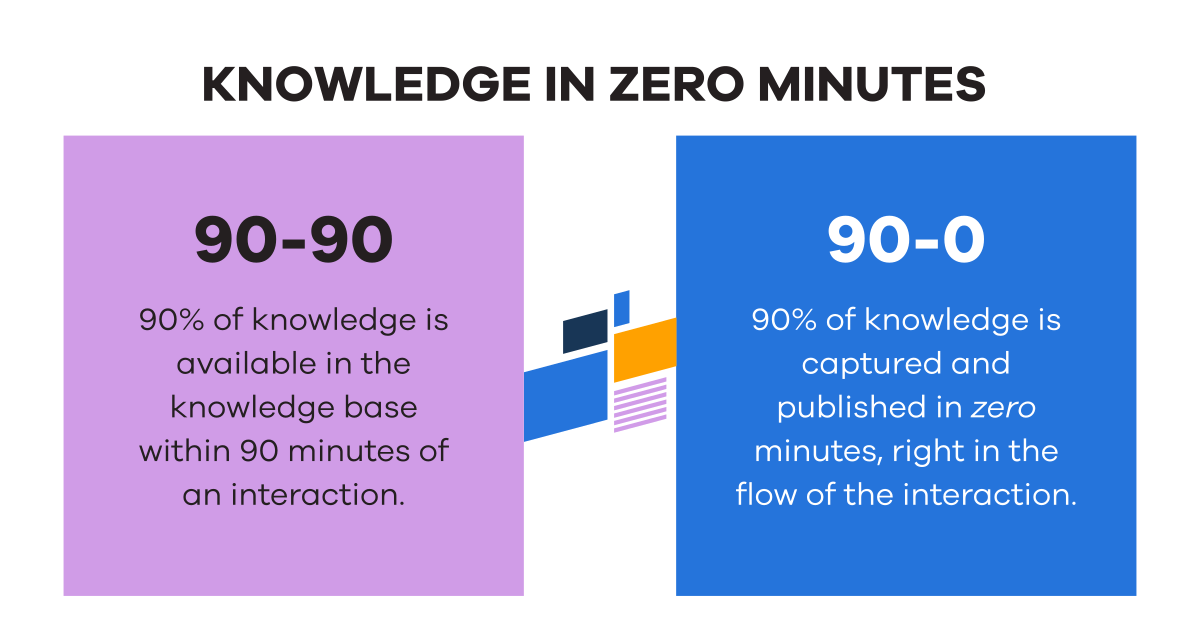
Why does this matter? Because slow publishing creates a snowball effect. Ten agents solve the same “new” problem separately because nobody’s answer got published in time. Reaching 90-0 means collective experience spreads instantly, so your team, your self-service, and your AI are all drawing from the same current source of truth.
Watch the Known vs. New ratio
Here’s a simple way to measure maturity: track how much of your resolved volume comes from reused (known) knowledge versus newly created (new) knowledge.
In a healthy KCS environment, about 20% of your knowledge base drives 80% of reuse. As you capture experience effectively, known content trends up and new creation stabilizes. When those lines cross, you’ve hit the critical mass that signals your knowledge base actually reflects real customer demand. That’s your green light for scaling self-service and AI, not before.
Don’t put goals on activities
This one saves a lot of teams from self-inflicted pain. Lana was blunt: “If you want to blow up your knowledge base, put goals on activities.”
People act according to how they’re measured. Goal an activity like link rate, and you’ll get lots of links, most of them meaningless. That’s garbage in, garbage out, and it poisons the exact data your AI depends on.
The better approach:
- Track activities and trends (link rate, creation volume) to watch workflow adherence.
- Goal outcomes (link accuracy, content health) to protect data integrity.
Triangulate across activity trends, business outcomes like resolution time and CSAT, and KCS outcomes like content health. One metric never tells the whole story.
Coaching is what makes it stick
Training gets your team started. Coaching makes KCS part of how they work.
Lana made a strong case for peer coaching, humans helping humans, over top-down policing. Coaches guide people through the habit change, and just as importantly, they help teams navigate the change fatigue and anxiety that comes with all the AI noise right now. As AI takes over repetitive tasks, the human role shifts toward the higher-value “evolve” work: analysis, content health, and continuous improvement. Coaches are the bridge that makes that shift feel like an upgrade instead of a threat.
Where RightAnswers fits
Everything above depends on tools that work in the natural flow of an agent’s day. If your platform makes knowledge harder to search, attach, improve, and create, adoption stalls no matter how good the methodology is.
That’s the reason RightAnswers exists. As a KCS v6 verified knowledge management platform, it’s built to support the solve and evolve loops with neural search, automated authoring that captures context and structures it into a KCS-compliant draft, and duplicate checkers that keep your knowledge base lean. And because we’re the only KM vendor offering integrated KCS training and consulting alongside the technology, your methodology and your tooling stay aligned from day one.
Your next step
If this recap resonated, the honest question to ask is: how ready is our knowledge, really?
You have a few ways to find out:
- Take the AI Readiness Assessment to benchmark where your knowledge stands today.
- Explore KCS training and consulting to build a practice that lasts.
- See how RightAnswers works and what a trusted knowledge foundation looks like in action.
The teams that win with AI aren’t the ones who moved fastest. They’re the ones who got their knowledge right first. That’s where you start.