Preparing for Salesforce Voice: What Open CTI's End-of-Life Means for Your Team
Preparing for Salesforce Voice: What Open CTI's End-of-Life Means for Your Team

Salesforce has announced end-of-life plans for Open CTI, with a planned retirement date of February 28, 2028. If that sentence just made your stomach drop, take a breath: there’s no immediate action required, and your current setup isn’t going anywhere tomorrow. What it does mean is that now is the right time to start planning.
Open CTI has been the backbone of countless contact centers’ telephony integrations for years, connecting CRM data with voice platforms such as Cisco, Avaya, and Genesys. While it has served organizations well, Salesforce is now shifting toward Salesforce Voice (formerly known as Service Cloud Voice), a more native approach to voice within the Salesforce platform.
This blog covers what’s actually changing, why Salesforce is making the move, and how your team can start preparing without the panic.
Why Salesforce Is Making the Move
Salesforce is investing in a more unified experience where voice, CRM data, digital channels, and AI capabilities work together natively. Your telephony provider still handles the actual call, that part doesn’t change. What Salesforce Voice changes is everything around it: instead of piecing together call records and data through a third-party add-on, Salesforce now gives recording, transcription, and AI features a native home in the platform. The underlying work is still done by your CCaaS vendor or CTI integration partner (like Upland). What’s changed is that Salesforce now stores and surfaces that data directly, rather than requiring a separate add-on to bridge it in.
For organizations, that means:
Less complexity. Native voice integration reduces the number of systems to manage and simplifies administration.
More visibility. Voice interactions and CRM data live together, giving agents a complete view of the customer without constantly switching applications.
A stronger foundation for AI. Deeper voice integration enables capabilities such as real-time transcription, AI-generated call summaries, intelligent routing, and future innovations like Agentforce.
A platform built for the future. As Salesforce continues to innovate, organizations can take advantage of new capabilities without relying on increasingly complex custom integrations.
What This Means for Your Team
Here’s the most important takeaway: this is not a forced migration.
Your current Open CTI deployment can continue running without disruption in the near term. Salesforce has provided a long transition window, so organizations have time to evaluate their options and migrate on a timeline that makes sense for their business.
That said, having time isn’t the same as having no reason to act.
The organizations that navigate this transition most successfully are the ones that begin planning early. Now is a good opportunity to understand how Open CTI supports your current environment, identify any custom integrations or dependencies, and consider how Salesforce Voice fits into your broader customer experience and AI strategy. Starting these conversations today gives your team flexibility instead of urgency as 2028 approaches.
Common Questions About the Open CTI to Salesforce Voice Transition
Do we need to do anything right now?
No. Your current Open CTI implementation can continue without disruption. This is about planning ahead, not reacting today.
What’s the timeline?
Open CTI is currently in maintenance mode, with a planned retirement date of February 28, 2028.
Will this require additional investment?
That depends on your current environment, licensing, telephony provider, and long-term goals. Every organization’s migration path is different, which is why evaluating your options early can help you make informed decisions before a deadline approaches.
Can we keep using our current telephony provider?
Yes, for now. Nothing changes today.
Longer term, organizations should evaluate how their telephony platform integrates with Salesforce Voice. Upland provides Salesforce Voice integrations for leading contact center platforms, including Cisco, Avaya, and Genesys, helping organizations transition while preserving the functionality they rely on today.
Will our agents or customers notice a difference?
Not immediately. When you do transition, the day-to-day experience will feel familiar, agents are still taking calls and helping customers, but the workflow underneath will look a bit different from what they’ve known in Open CTI.
When organizations do transition, agents often benefit from a more streamlined workspace where voice interactions, customer information, and Salesforce workflows are available within a single interface. Customers benefit from faster, more connected service experiences powered by a unified platform.
How Upland Helps You Get There
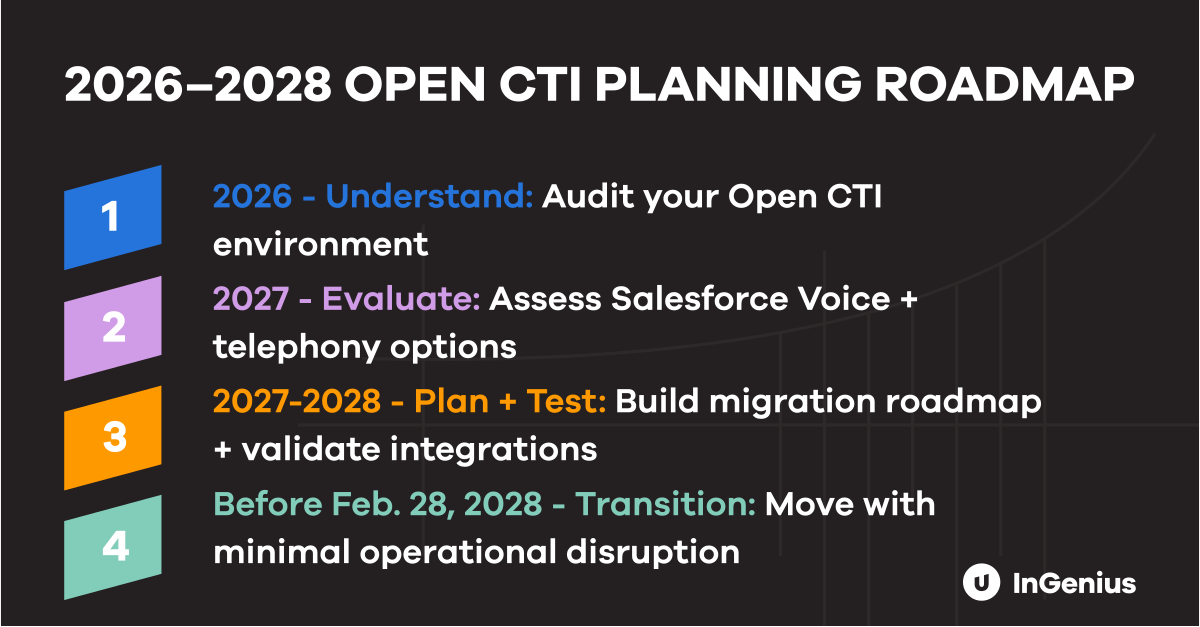
Migrating from Open CTI is more than a technical upgrade, it’s an opportunity to modernize your contact center while minimizing disruption.
Upland helps Salesforce customers understand the impact of the Open CTI retirement, evaluate their options, and build a migration strategy that aligns with their business goals and timeline.
We can help you:
- Assess your current Open CTI deployment and identify dependencies
- Evaluate how Salesforce Voice fits within your existing architecture
- Support integrations with leading contact center platforms, including Cisco, Avaya, and Genesys
- Build a migration roadmap that minimizes operational disruption and aligns with your business priorities
- Guide your transition at a pace that makes sense for your organization
Whether you’re planning a migration next year or simply starting the conversation, our goal is to help you move forward with confidence, not pressure.
Ready to Start Planning?
February 2028 may seem far away, but successful transitions rarely begin at the deadline. If you’re an existing Upland customer, reach out to your account manager to start the conversation. If you’re new to Upland, contact our sales team to see how we can help you assess your environment, build a migration strategy, and make the move to Salesforce Voice on your timeline.