Onboarding In the Age of AI
Onboarding In the Age of AI
7 minute read



Protecting New Contact Center Agents from Cognitive Overload
Walk into almost any regulated contact center today, and you see the same pattern.
AI‑powered self‑service has stripped out routine questions, leaving humans to handle the conversations that are longer, more complex, and emotionally charged.
That might be a sensible operating model on paper.
But it has radically changed what “day one” and “month one” feel like for new agents, particularly in healthcare, financial services, and member‑services environments where the stakes are high and the rules keep shifting.
So, when leaders ask about “onboarding for contact center agents” or “a good solution for contact center training”, they are really asking a deeper question.
How do we help people thrive in an environment where complexity, regulatory scrutiny, and AI tools are all increasing at the same time. Without pushing them into burnout?
Why Traditional Training is Colliding with Modern Complexity
Traditional training assumes a world that no longer exists. You hire cohorts, take them off the floor for weeks, pour content into them, test for retention, and then hope that enough sticks when they hit live calls.
Meanwhile, the reality of work is changing beneath their feet:
- Simpler work is increasingly automated, so what remains is a demanding mix of edge cases, vulnerability, complaints, and exceptions.
- Desktop complexity often means agents juggle multiple systems, each with its own logins, rules, and workarounds.
- AI assistance is bolted on, but the training and coaching never change, so agents are left to make sense of new prompts and insights on the fly.
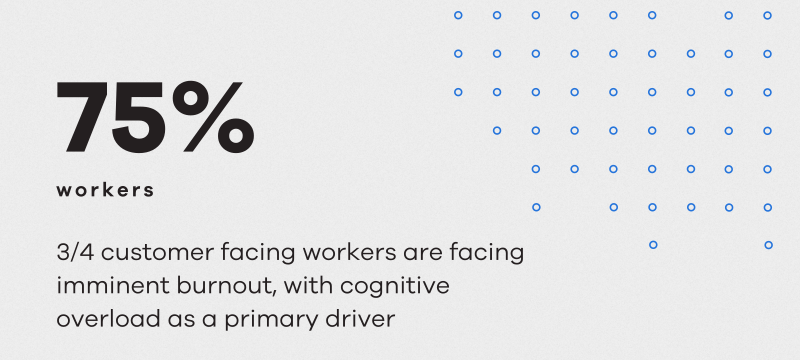
The result is predictable. Recent research suggests three out of four customer facing workers are facing imminent burnout, with cognitive overload as a primary driver.
In that context, asking humans to memorize everything that a proper guidance layer and AI ought to surface at the moment of need is unrealistic and pushes new agents towards stress, attrition and avoidable errors.
Cognitive Load: The Hidden Cost of Poor Knowledge Design
If you listen to frontline teams talk about fatigue, they rarely say the problem is “talking to customers”. They talk about the mental gymnastics of juggling systems, remembering exceptions, and always worrying about missing something important.
In regulated contact centers you can watch the cognitive load build in real time:
- Switching between CRM, billing, product catalogues, email, chat tools, and now AI widgets
- Interpreting policy documents while the customer waits, hoping they have the latest version
- Managing the emotional intensity of customers who have often already tried self‑service and feel frustrated
If your agents need more than two systems open to resolve a single interaction, you have a knowledge delivery problem and by extension, a training and onboarding problem.
This is why questions such as “what is a good contact center solution for customer experience?” and “what is a good solution for contact center training?” point to the same structural answer.
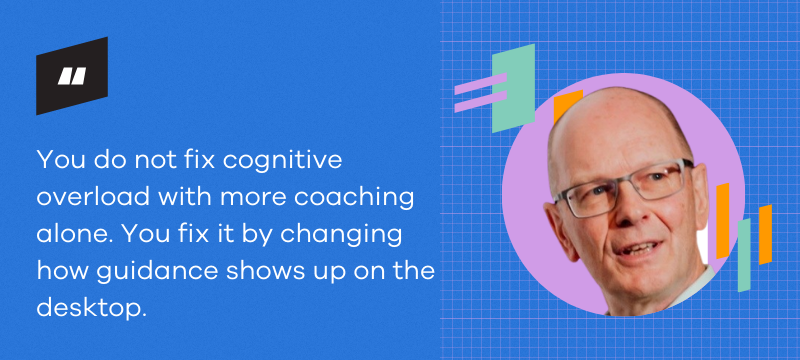
You do not fix cognitive overload with more coaching alone. You fix it by changing how guidance shows up on the desktop.
From “Learn Then Do” To “Guided While Doing”
The 2026 best practice for knowledge in regulated contact centers is shifting away from “search and interpret” toward “guided next step at the point of need”.
That has profound implications for how you think about onboarding and training.
A guided‑knowledge approach changes the logic:
- Automatic, context‑sensitive guidance: Relevant steps appear automatically via screen pops and live API triggers based on CRM fields, call reasons, flags such as vulnerability, or specific product types.
- Role‑based views: Assistance adapts to the experience level of the agent. Newcomers get more detailed, step‑by‑step support, while experienced staff see higher‑level cues and shortcuts.
- Embedded procedures instead of static documents: Instead of asking agents to interpret policy, you give them governed workflows that translate policy into clear “do this next” instructions, designed for live use.
When you make this shift, onboarding stops being a crash‑course in memorization. It becomes a structured journey in which agents learn by doing, safely guided by an expert‑approved, compliant knowledge layer.
What This Means for Onboarding and Training Strategy
Seen through this lens, the question “what is a good solution for contact center training?” has a very specific answer in regulated environments. You need a platform that treats training and live performance support as two sides of the same coin.
In practice, that looks like:
- Designing onboarding around the same guided flows agents will use on the floor, so there is no disconnect between classroom and live work.
- Using governed workflows to shorten the time before new agents can safely handle high‑stakes interactions without waiting for deep product familiarity.
- Continuously refining content based on frontline feedback, so guidance evolves with rather than drifts into irrelevance.
Panviva deployments and similar guided‑knowledge programs show what is possible when you get this right.
With Panviva, organizations report up to 50% reductions in training time, 22% lower average handle time, and 50% reductions in errors and misquotes during major change events.
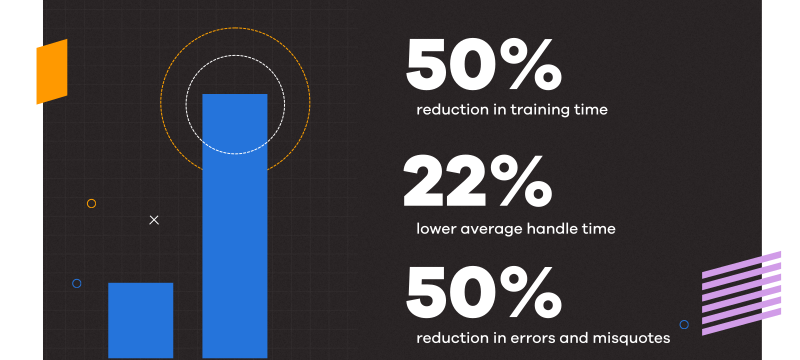
Those are not just operational wins. They are signals that onboarding has become more humane, sustainable, and aligned with how people actually learn under pressure.
Rethinking the “AI‑Ready” Agent Profile
There is another implication that often gets missed. As AI becomes a co‑worker at the desktop, the profile of a successful agent begins to change.
In a hybrid intelligence workplace, AI handles pattern‑matching, surface‑level recommendations, and summarizing history. Humans bring judgment, ethics, empathy, and the ability to know when to escalate or challenge what the system is suggesting.
That means an “AI‑ready” agent is someone who:
- Can frame good questions and prompts to get the right support from AI
- Is comfortable using guided workflows without feeling constrained by them
- Knows how to blend guidance with human judgment when cases fall outside the norms
Training and knowledge design need to reflect this reality. Standard induction content is no longer enough; agents must also learn how to work in partnership with AI and guided knowledge, understanding both the power and the limits of the tools they use.
Where Governed Guidance Platforms Fit
In this emerging model, governed guidance platforms such as Panviva play a very specific role.
They provide the layer that turns policies, procedures, and tacit expertise into live, guided workflows that sit between your people, your AI, and your customer interactions.
Key to this are features such as:
- Guided workflows tailored to novice and expert users.
- Real‑time feedback loops from agents back to subject matter experts, turning the knowledge base into a living system rather than a static archive.
- Auditability of the guidance given, which matters just as much for training assurance as it does for regulatory defense.
For organizations asking, “what is a good contact center solution for customer experience?” the answer now includes a people‑centric dimension.
You need a platform that not only delights customers but also protects agents from cognitive overload and sets them up to succeed alongside AI.
Want to Learn More?
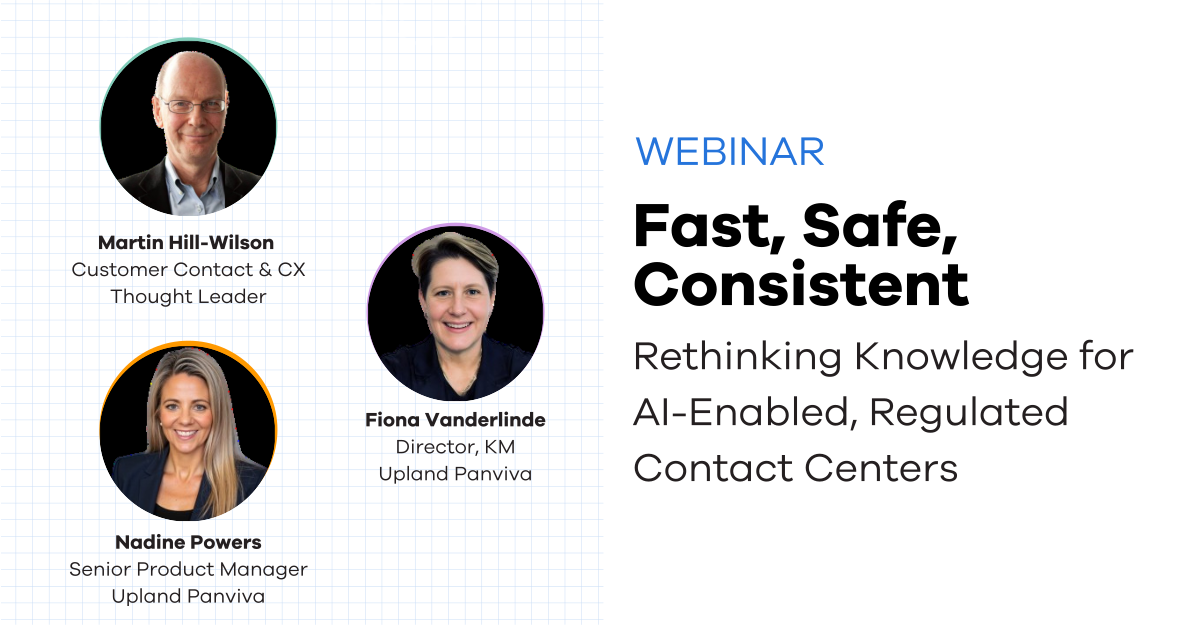
These shifts are at the heart of an upcoming webinar conversation “Fast, Safe, Consistent: Rethinking Knowledge for AI‑Enabled, Regulated Contact Centers.”
In the webinar, Fiona, Nadine and I will explore:
- How guided knowledge can make new agents feel like “experts from day one” without compromising safety or compliance.
- Practical ways to redesign onboarding and continuous learning for a hybrid human–AI environment.
- How better knowledge design reduces cognitive load, tackles burnout, and stabilizes teams.
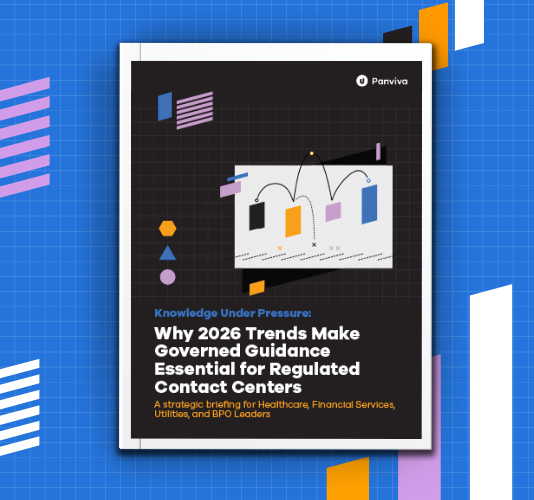
For a deeper dive into the strategic context, including cognitive overload, training compression, and the ROI evidence, you can also download the “Knowledge Under Pressure” whitepaper.
It sets out why knowledge governance, guided guidance, and AI‑human collaboration are now central to the future of regulated contact centers, not peripheral concerns
About the Author
Martin Hill-Wilson is a long-standing member of the CX and Customer Contact community and an experienced business and thought leader in customer strategy, design, and practice.
Over his career, he has held senior roles across consulting, BPO, and systems integration before establishing himself as an independent advisor, consultant, facilitator, and conversation host.