Why Your Best Agents Leave: The Operational Strain Behind Healthcare Contact Center Agents
Why Your Best Agents Leave: The Operational Strain Behind Healthcare Contact Center Agents
4 minute read



Healthcare contact center agent turnover averages between 47% and 56% annually, much higher than the average of 30% reported across all industries, according to Insignia Resources (2026). Driven by cognitive overload, knowledge management failures, and the high-stakes nature of healthcare inquiries, turnover is usually not a matter of agents simply moving on to new opportunities. Rather, the above pain points can be traced to an organization’s healthcare knowledge management—or lack thereof.
When agents don’t have access to the right tools to find accurate information, they burn out fast,and ultimately, often leave. Meanwhile, candidate pipelines can’t keep up with demand.
Plus, the effects of healthcare contact center agent turnover extends far beyond the customer service department. It’s institutional knowledge that walks out the door—potentially leading to longer hold times for members, confusion among staff, and, over time, the erosion of the service experience you’ve worked to build.
In this article, we’ll unpack why healthcare contact center attrition rates are so high and offer actionable solutions for addressing it with optimized knowledge management in healthcare.
The true cost of losing a healthcare contact center agent
When an experienced healthcare contact center agent departs, the consequences of their departure are both immediate and long-term. First, there’s the natural consequence of your team losing this person’s professional experience and institutional knowledge as a resource. From there, it gets complicated:
- Morale plummets. Between heavier workloads, feelings of uncertainty, and, eventually, burnout—call center agents become far more likely to quit themselves (Stratus HR, 2026).
- Customer service declines, hold and wait times increase, and risk escalates. With fewer representatives available for support, remaining agents are often stretched too thin to deliver consistent, complete customer service. Healthcare contact center agents may also be busy with competing priorities when turnover is high, including training new agents, scrambling to reach performance goals, and updating healthcare knowledge management repositories.
- The organization’s reputation changes. Starting immediately and over time, these challenges can cause lasting reputational damage as customers become frustrated with long wait times, inaccuracies, and unresolved queries.
Why the stakes are so high in healthcare knowledge management
Due to the sensitive nature of healthcare inquiries, knowledge management materials must be fully current. Otherwise, inconsistent information can cause not only confusion but also distress for customers.
That’s because healthcare queries are often centered around one of 3 categories, all of which can be uniquely nuanced and difficult to answer as a result.
Billing
While billing is an aspect of contact centers across industries, billing questions are particularly high stakes in healthcare knowledge management due to the sheer, relative high costs of healthcare. When making a significant investment in health coverage, customers are understandably more scrutinizing when it comes to communication. Answers must be consistent and quick—but overladen agents may feel pressure to prioritize one over the other when a customer is already dissatisfied, leading to further issues.
Claims
Complexity is also an element of healthcare knowledge management, thanks to the conditional, individualized nature of claims processing. Successful claims communications are direct and to-the-point, —relying on an agent’s full understanding of the “why” behind the status of a claim. This requires detailed, current, and accessible knowledge guidance for agents to reference in real time.
Privacy
Unlike other industries, healthcare contact centers strictly adhere to federal privacy guidelines like HIPAA. To stay compliant, healthcare KM must prioritize customer trust which, in turn, relies on accurate, sensitive handling of information by agents.
The effects of cognitive overload on healthcare contact centers and their agents
The more tangible challenges of healthcare contact center agent work listed above also contribute to something less easily definable, but equally pervasive: cognitive overload. Marked by the feeling (and reality!) of mental demands exceeding memory capacity, cognitive overload can directly escalate into agent burnout in just 10-13 months (ICMI, 2025).
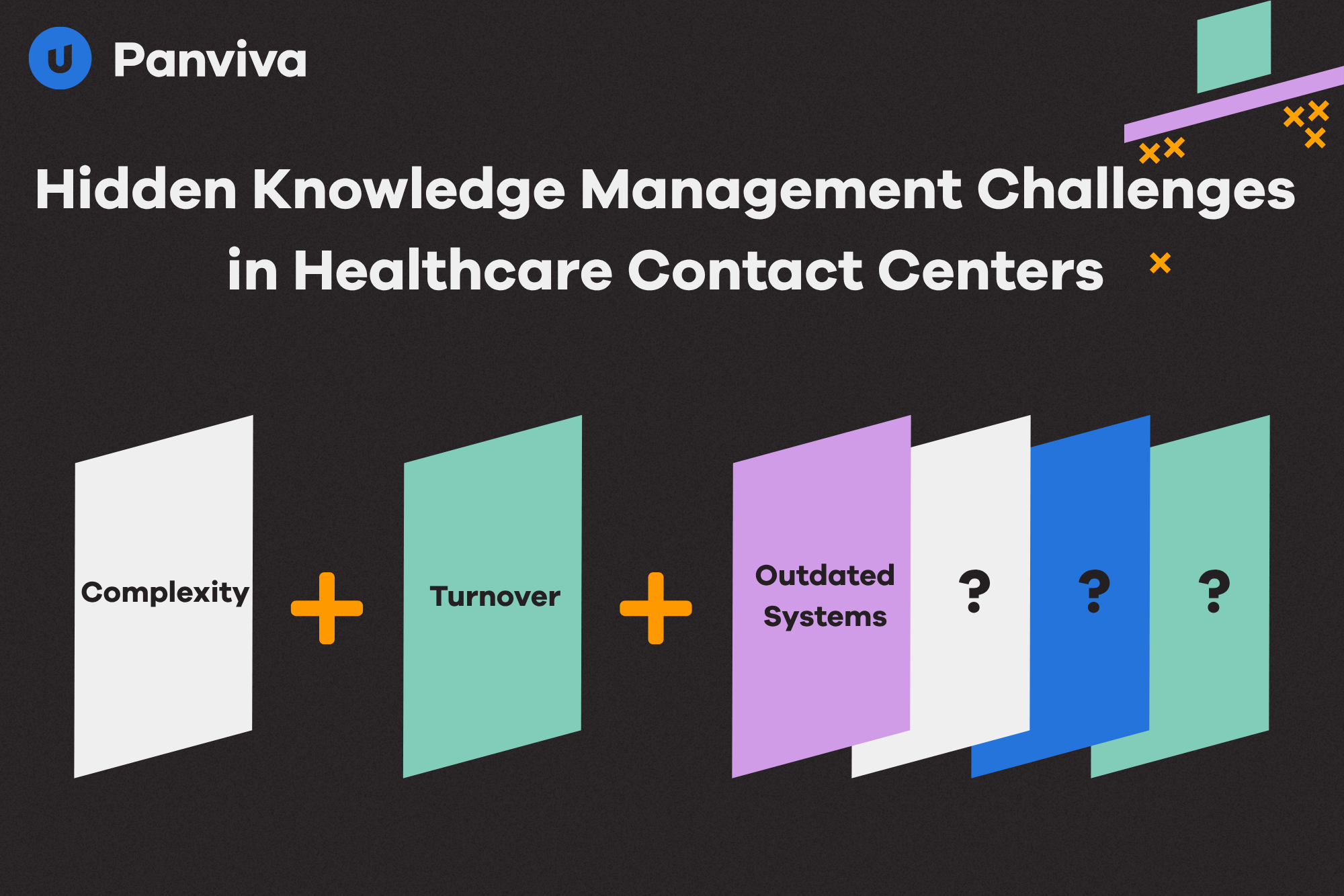
Between the real-world demands of healthcare knowledge management and the day-to-day impacts of cognitive overload, your agents can find themselves in an impossible juggling act:
What changes when you close the knowledge management gap for your healthcare contact center agents?
When healthcare knowledge guidance is delivered in real time, costs and compliance risk decrease, while agent retention and satisfaction improve.
Knowledge management with Panviva allows your team to access and deliver critical information to your members mid-call, with ongoing guidance across a wide range of member inquiries.
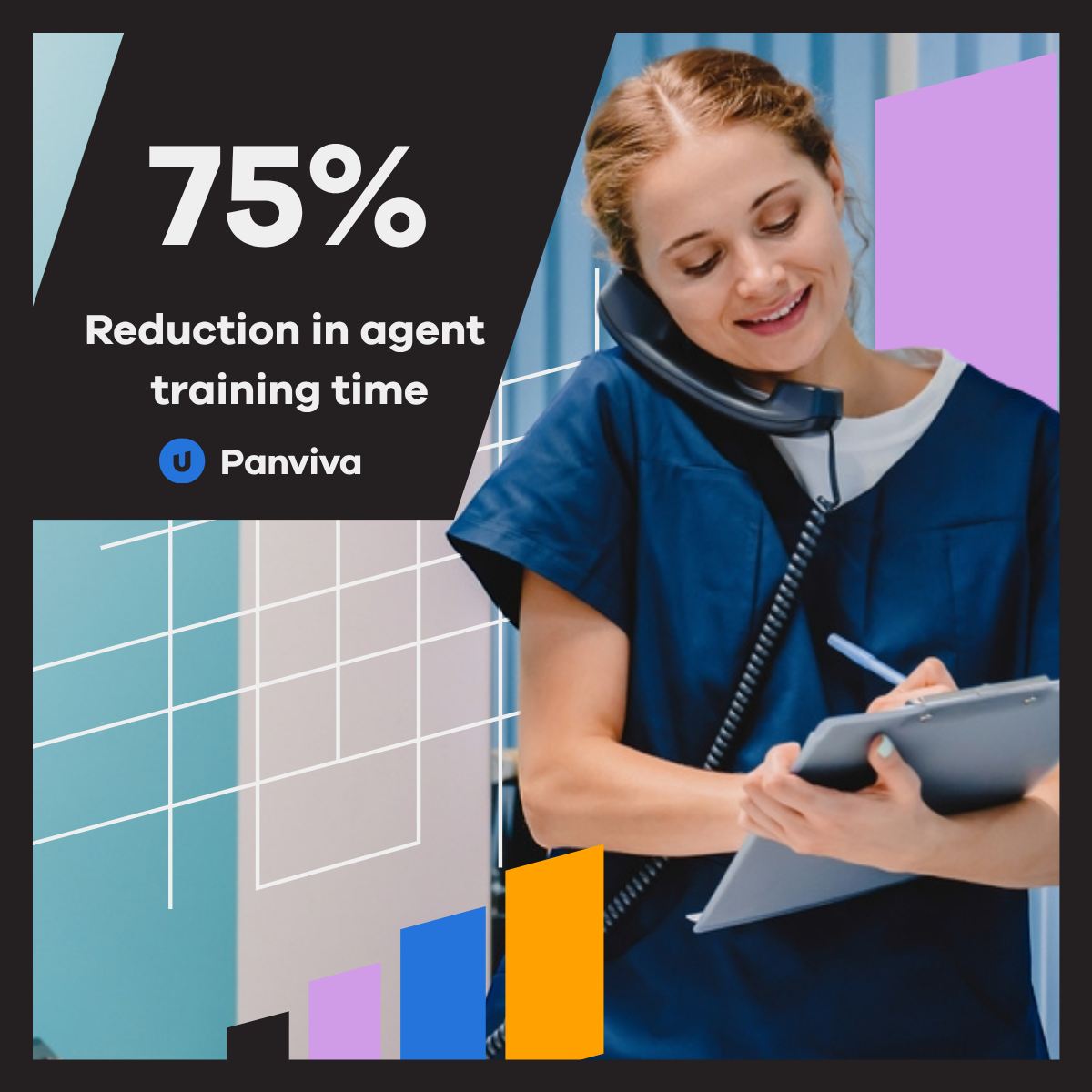
Here’s how Nevada Health’s adoption of Panviva led to a 75% reduction in employee training time, and a nearly-60% reduction in agent turnover.